Photo: newsable.asianetnews.com
"Ancient Asteroid Collision Unveiled at Moon's South Pole After 4 Billion Years"
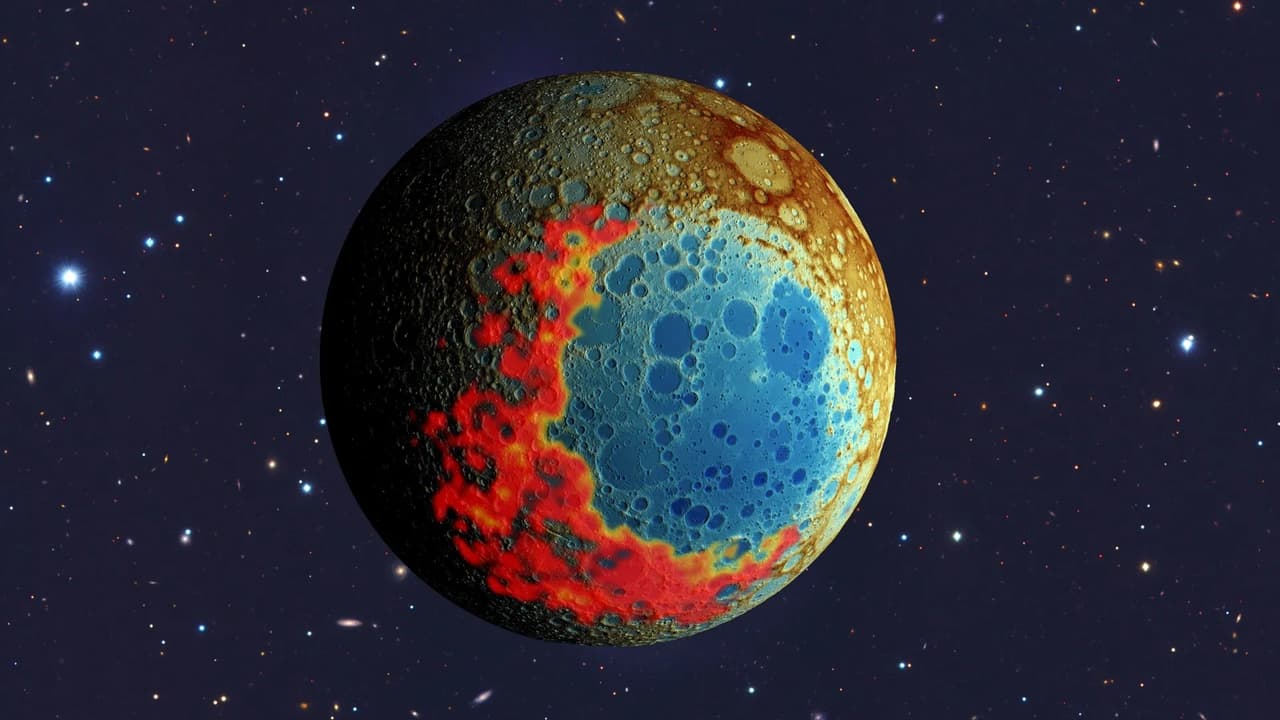
A recent study reveals that a massive asteroid collision formed the Moons South Pole–Aitken basin 4 billion years ago, revealing crucial insights into lunar history and volcanism.
- The study, conducted by the University of Arizona, indicates that an asteroid struck the Moon, creating the South Pole–Aitken basin, the largest impact crater in the solar system.
- NASAs Artemis astronauts are set to explore the Moons south pole, where they will investigate the geological layers exposed by the ancient asteroid impact.
- This significant asteroid impact occurred approximately 4 billion years ago, uncovering deep lunar layers that have shaped the Moons volcanic history on the far side of the Moon.
Why It Matters
Understanding the formation of the South Pole–Aitken basin could provide vital information about the Moons geological history and its role in the evolution of the solar system, enhancing future lunar exploration efforts.