Photo: nature.com
"Arctic Sea Ice Decline Boosts Nitrogen Fixation via NCDs"
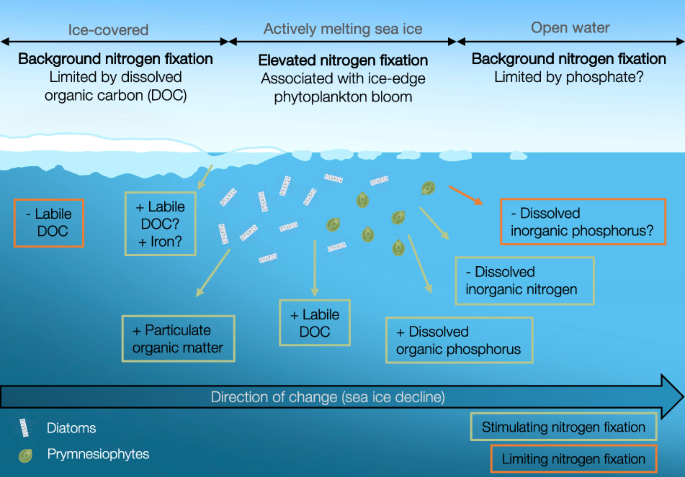
The decline of Sea ice in the Arctic Ocean is enhancing Nitrogen fixation processes via Bacteria, impacting marine ecosystems and nutrient dynamics.
- Amplification of nifH genes, crucial for Nitrogen fixation, was successful at Stations 18, 50, and 36, showing high expression levels linked to Algae and Bacteria.
- At Station 18, located in multiyear Sea ice, Nitrogen fixation was primarily driven by Betaproteobacterial ASVs from the order Rhodocyclales, highlighting their ecological role.
- Research indicates that the decline of Sea ice in the Arctic is likely increasing Nitrogen availability in the Ocean, which could significantly alter Marine life dynamics.
Why It Matters
This research underscores the relationship between climate change and nutrient cycling in the Arctic, revealing how Sea ice loss can affect Nitrogen fixation and potentially disrupt marine ecosystems.