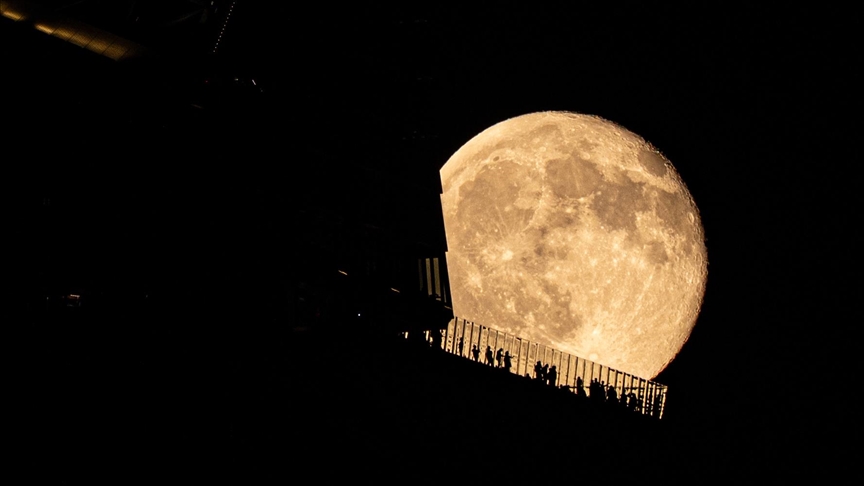
Photo: aa.com.tr
Lunar samples provide evidence of temperature differences on moon's surface: Report
Chinese scientists found that the far side of the Moon's mantle is colder than the near side, revealing new insights into lunar geology from Chang'e-6 samples.
- The research, conducted by Chinese scientists, indicates that the far side of the Moon's mantle is significantly colder than the near side, challenging previous geological assumptions.
- Samples collected during China's Chang'e-6 mission provided the data necessary for this groundbreaking discovery, emphasizing the importance of lunar exploration for understanding planetary geology.
- This study highlights differences in thermal properties between the Moon's near and far sides, which could have implications for future lunar missions and understanding the Moon's formation.
- Published on Monday, this finding adds to the growing body of research from China's lunar exploration efforts, showcasing advancements in lunar science and technology.
Why It Matters
This discovery is significant as it enhances our understanding of the Moon's geological history and thermal dynamics, which may affect future exploration and potential resource utilization. Scientists and space agencies can leverage this data to refine models of planetary formation and behavior. Additionally, it underscores China's growing capabilities in space exploration, potentially influencing international collaborations and competition in lunar research.