Photo: news.mit.edu
"MIT Physicists Use Electrons as Messengers to Unlock Atom's Nucleus Secrets"
MIT physicists have unlocked secrets of the Atomic nucleus by using electrons from a radium atom in a molecule, revealing new insights into fundamental particle interactions.
- Researchers at the Massachusetts Institute of Technology precisely measured the energy of electrons in radium monofluoride, a molecule formed by radium and fluoride atoms.
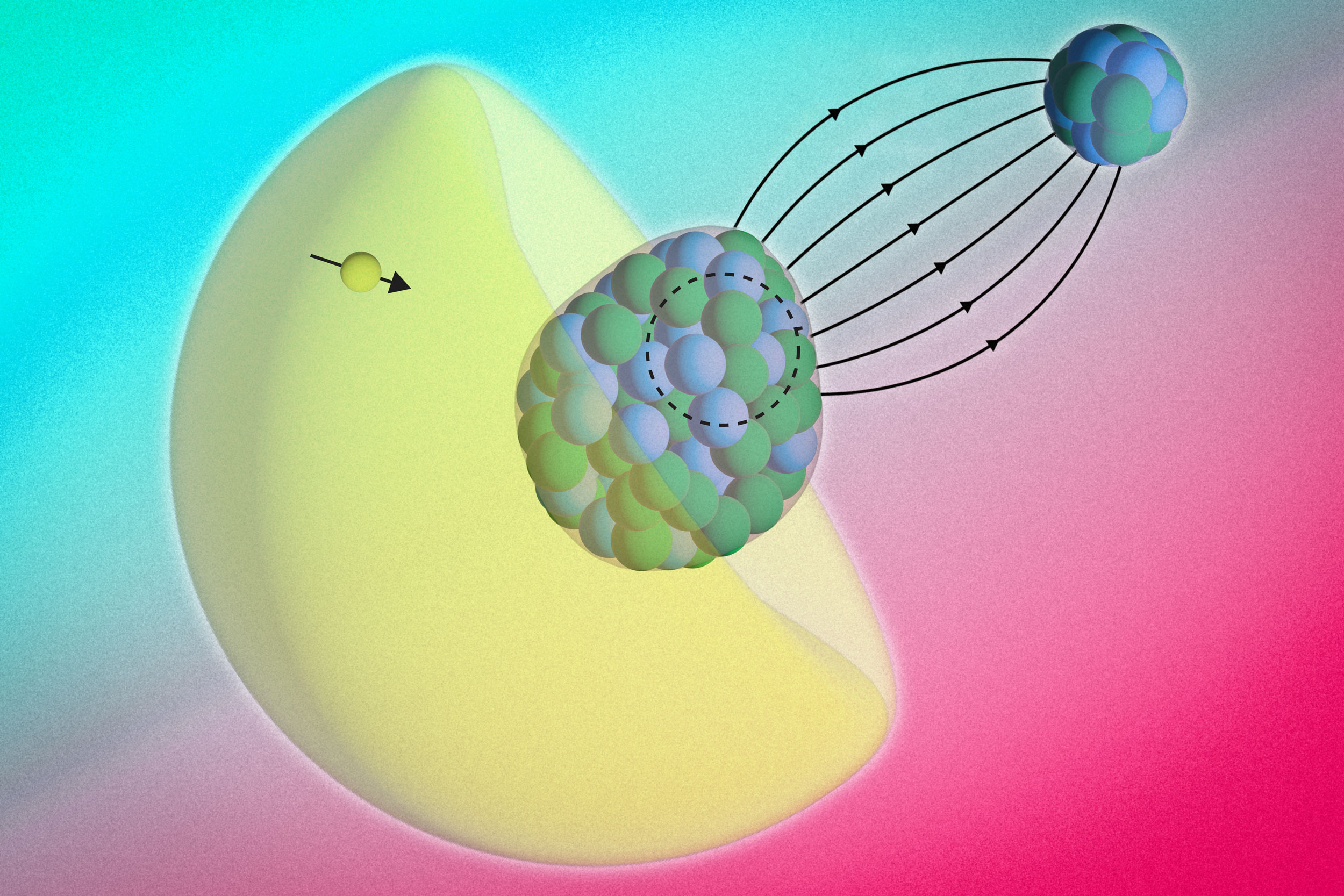
- This innovative approach utilizes the environment within a molecule as a microscopic particle collider to study the interactions of electrons and protons in the Atomic nucleus.
- The findings, published in the journal Science, could enhance our understanding of Symmetry in particle physics and contribute to ongoing research at facilities like CERN.
Why It Matters
This breakthrough in using electrons as messengers could revolutionize our understanding of atomic structures, leading to advancements in nuclear physics and potential applications in technology and energy.