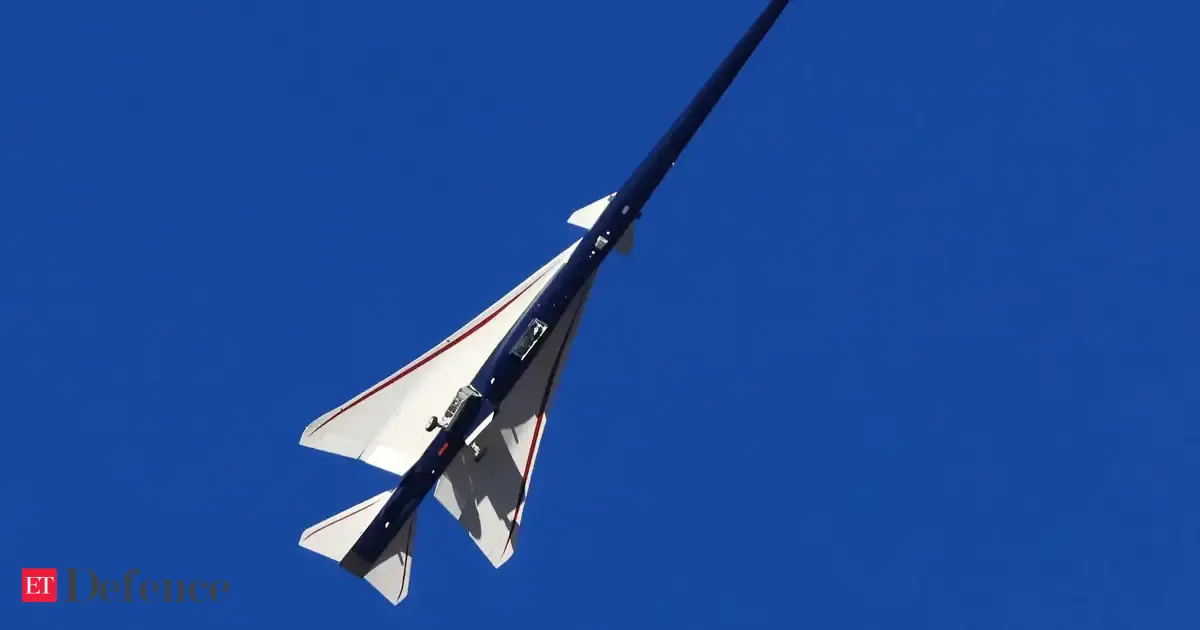
Photo: economictimes.indiatimes.com
NASA's X-59 Jet Makes Historic Quiet Supersonic Flight Over California
NASAs X-59 supersonic jet achieved a groundbreaking test flight in Palmdale, California, showcasing its ability to reach supersonic speed with a quieter sonic thump, revolutionizing air travel.
- On Tuesday, NASAs X-59 completed its first test flight over the Southern California desert, marking a significant milestone in developing quieter supersonic aircraft.
- The $518 million project, developed in collaboration with Lockheed Martins Skunk Works, aims to enable commercial flights that break the sound barrier without the disruptive sonic boom.
- This achievement comes as the United States Air Force seeks advancements in supersonic speed, potentially transforming future air travel and addressing noise restrictions previously limiting such aircraft.
Why It Matters
This successful flight signifies a major leap toward quieter supersonic air travel, which could reshape commercial aviation and stimulate economic growth in the aerospace sector. The advancements by NASA and Lockheed Martin could lead to new regulations, benefiting both travelers and the aviation industry.