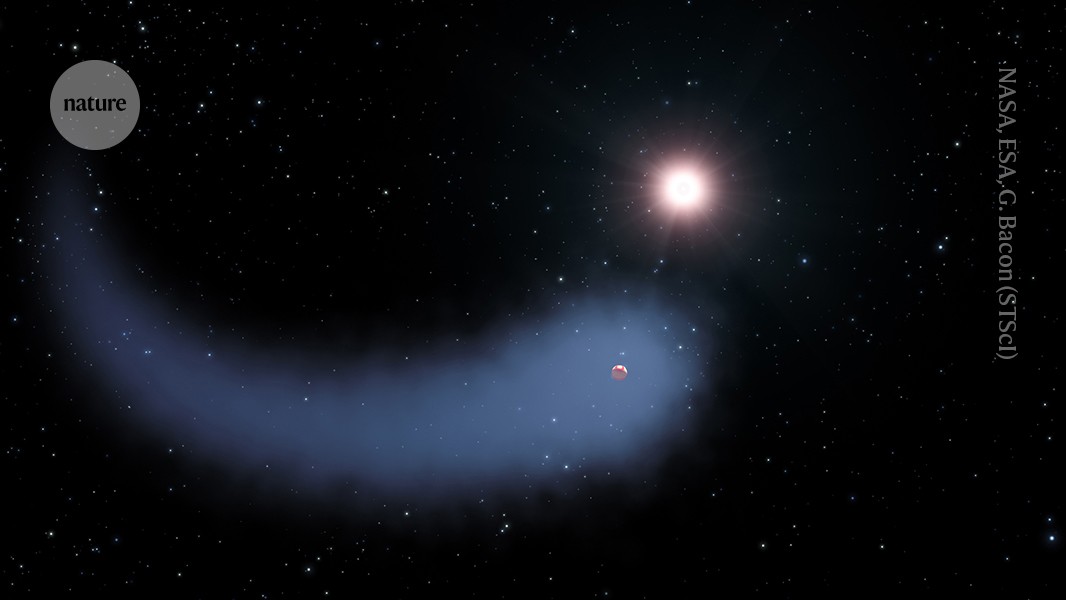
Photo: nature.com
"Scientists Seek Chemists' Insights to Decode Exoplanet Mysteries"
Scientists are leveraging insights from chemists to decode the diverse atmospheres of exoplanets, utilizing data from the James Webb Space Telescope to enhance our understanding of these distant worlds.
- Since the first exoplanet discovery 30 years ago, thousands have been identified, showcasing a remarkable diversity from scorching lava planets to potential Earth-like worlds.
- The James Webb Space Telescope has been pivotal in analyzing the atmospheres of exoplanets, helping scientists understand temperature variations and chemical compositions, including those of WASP-18b.
- A recent study involving researchers from Cornell University utilized 3D computer graphics to visualize the atmosphere of exoplanets, improving interpretations of data collected during stellar eclipses.
Why It Matters
Understanding the atmospheres of exoplanets is crucial for identifying conditions that might support life. Insights gained from this research could inform future explorations and our comprehension of planetary systems beyond our own.