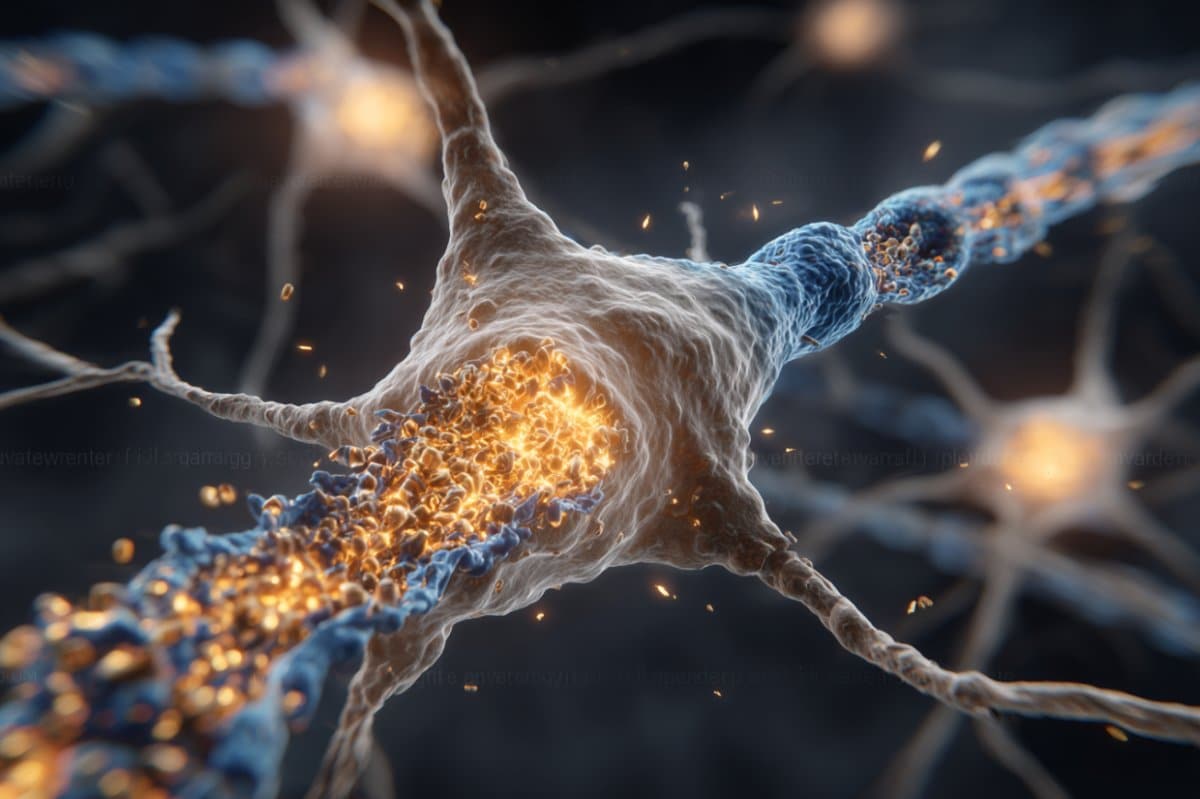
Photo: neurosciencenews.com
"Unlocking Memory: How NMDA Receptors Control Neuron Activity"
New research reveals how NMDA receptors regulate neuron activity by controlling ion flow, impacting learning and memory, with implications for treating neurodegenerative disease.
- Scientists used cryo-electron microscopy to visualize NMDA receptors, discovering how the neurosteroid 24S-HC keeps these ion channels fully open for optimal calcium and sodium influx.
- The study showed that when NMDA receptors are fully open, calcium and sodium ions flood into the neuron, enhancing synaptic activity critical for learning and memory.
- In contrast, a synthetic compound partially closes NMDA receptors, restricting calcium ion entry and potentially offering a therapeutic approach for conditions related to neurodegenerative disease.
Why It Matters
Understanding how NMDA receptors operate opens avenues for new treatments targeting neurodegenerative disease, emphasizing the importance of ion channel regulation in brain function and health.